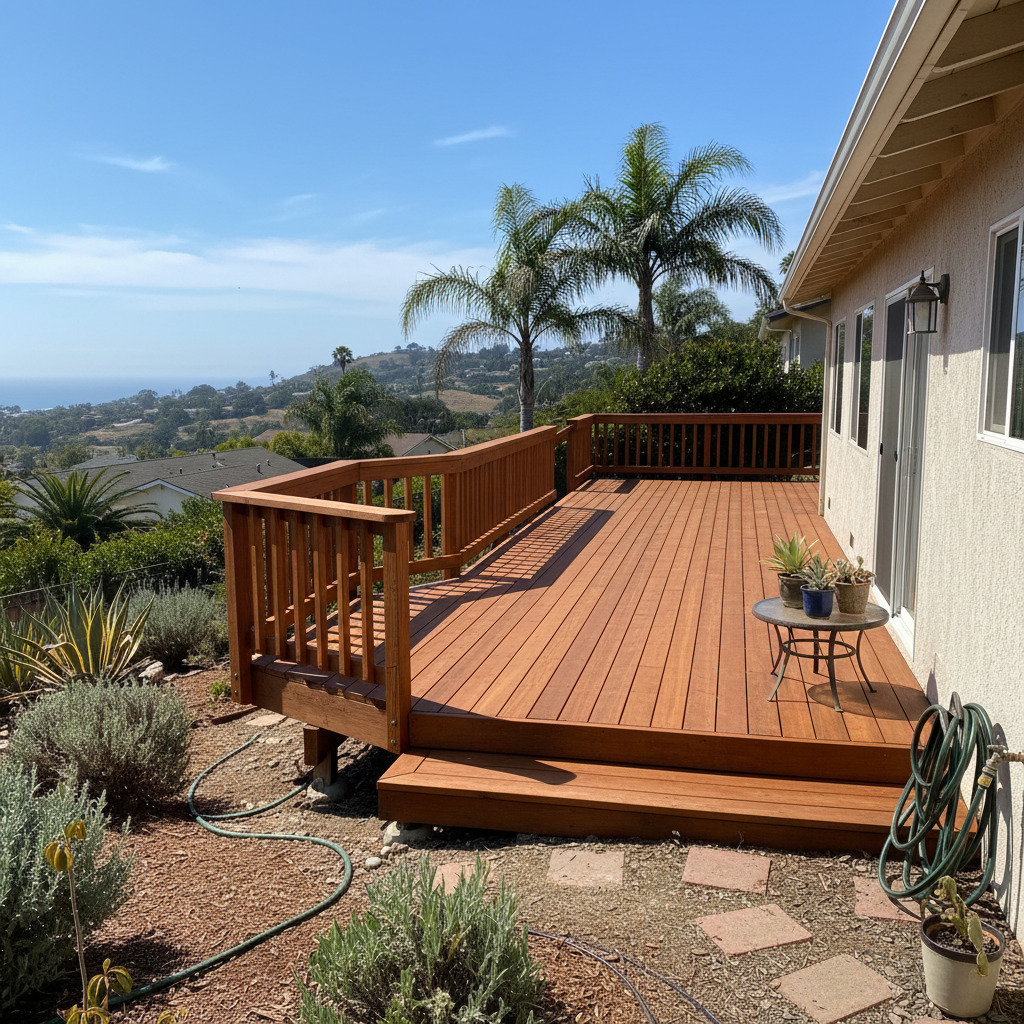
The marine layer rolls in off the Pacific and coats everything in a fine layer of moisture very quickly. If you live west of the 5 in places like Leucadia or down near Swami's, your outdoor deck takes a daily beating from salt air, morning humidity, and intense afternoon sun. That constant cycle does a lot of damage to wood and fasteners, which means timing your deck repairs is important for structural survival.
Peak Deck Solutions has seen local properties year after year: homeowners wait until winter rains start leaking through the boards before they call for help. By then, minor dry rot has turned into structural timber failure. Timing your deck repairs right makes all the difference in keeping costs down.
When to Schedule Your Deck Repairs
Late spring through early fall is prime time for major carpentry work and sealing in Southern California. The coastal marine layer usually burns off by midday, giving sealants, stains, and adhesives the proper low-humidity window they need to cure right. If you try to stain or waterproof a damp deck in January, the moisture trapped in the wood will cause the finish to bubble and peel within months.
- Spring is ideal for clearing out winter debris and booking structural tune-ups before summer BBQs.
- Summer offers stable heat for fast-curing sealants and board replacements.
- Early autumn provides a great window to prep surfaces before the winter damp sets in.
How Local Weather Conditions Impact the Work
Encinitas does not get freezing blizzards, but our microclimate has its own set of challenges. Salt fog carries miles inland, accelerating corrosion on standard steel joist hangers and railing brackets. When Peak Deck Solutions pulls up old decking boards during a repair job, we almost always find rusted-out fasteners that gave way long before the wood actually failed.
Temperature swings also matter. Going from a chilly 50-degree fog bank in the morning to 75 degrees under direct sun causes wood and composite materials to expand and contract constantly. That movement stresses ledger boards and loosens up railing posts. Peak Deck Solutions handles these structural weak points by swapping out standard hardware for marine-grade stainless steel fasteners that will not fail when the salt air rolls in.
Protecting Your Investment Year-Round
Homeowners do not need to overhaul their entire outdoor space every few years if they stay ahead of the curve. Simple habits go a long way in our coastal environment.
- Keep the gaps between your deck boards clear of pine needles and windblown dirt so water can drain freely instead of pooling against the joists.
- Wash off the salt accumulation every couple of months, especially if your home sits right on the bluffs or close to the ocean.
- Check your ledger flashing and stair attachments after any heavy coastal storm to make sure nothing is shifting.
Taking care of small issues early saves you from a massive tear-out later on. Keep an eye on how your boards feel underfoot, watch for soft spots near post bases, and address deck repairs when the weather is on your side.