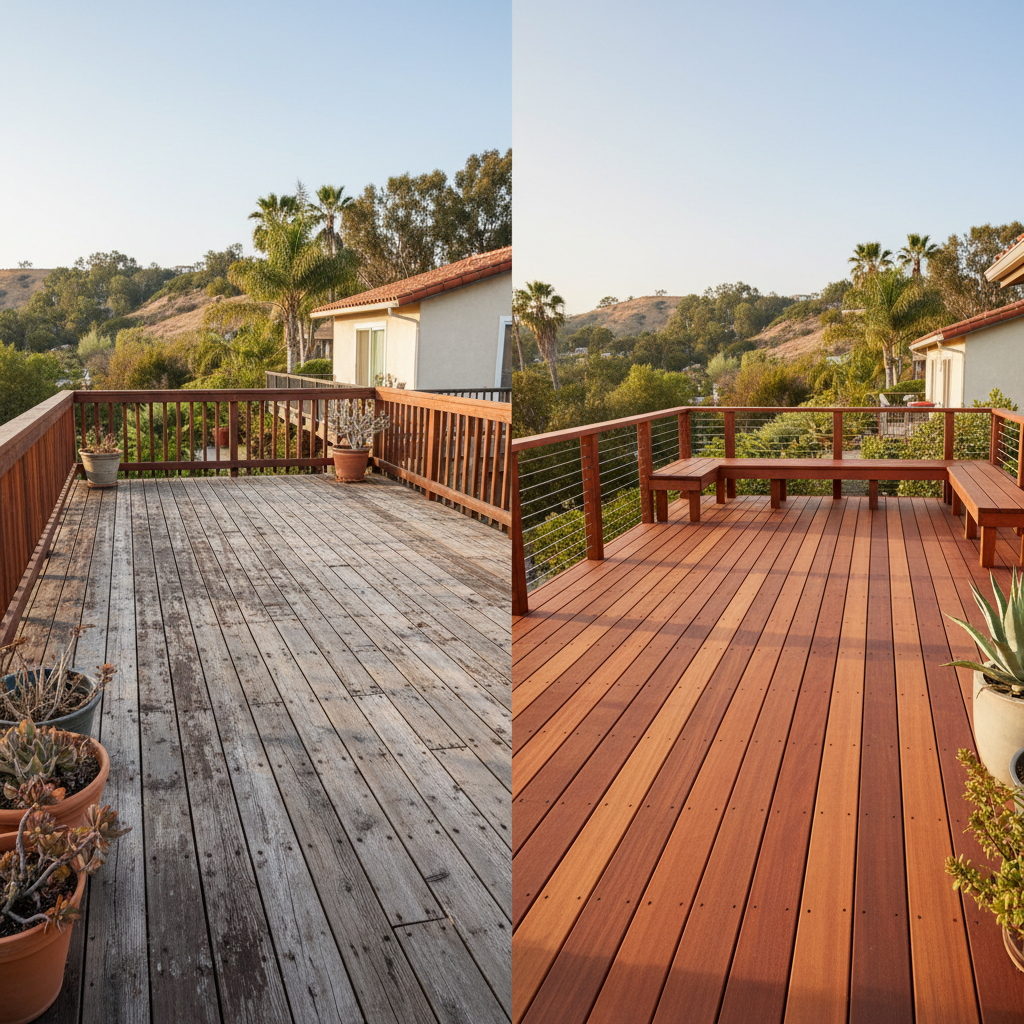
Pressure-Treated vs. Redwood: What's the Real Deal for Your Deck?
So, you're thinking about a new deck, or maybe replacing an old one. Great call – a deck adds so much to an Encinitas home, especially with our amazing weather. But then you hit the first big question: what kind of wood should you use? Most folks narrow it down to two main players: pressure-treated lumber or redwood. I get asked about this all the time, so let's cut through the noise and talk about what really matters for your outdoor space.
The Cost Factor: Upfront vs. Long-Term
Right off the bat, cost is usually what people think about. Pressure-treated (PT) lumber is almost always cheaper per linear foot than redwood. It's a significant difference, sometimes half the price or even less, especially for the structural stuff like joists and beams. If you're on a tight budget and want to get a deck built now, PT is your friend. But here's the kicker: that's just the upfront material cost. You've got to think about the long game.
Redwood, while pricier initially, can often save you money down the line. It's naturally resistant to rot and insects, which means less chemical treatment needed and potentially fewer headaches over the years. PT wood, especially the stuff you find at big box stores, can sometimes warp or crack more easily if not properly maintained, leading to replacement costs sooner than you'd expect. So, when you're looking at the price tag, remember it's not just about today; it's about the next 10 or 20 years too.
Durability and Longevity: Battling the Elements
This is where the woods start to show their true colors, especially here in Encinitas. We don't get extreme cold, but we do get plenty of sun, marine layer moisture, and the occasional heavy rain. That's a recipe for wood degradation if you're not careful.
Pressure-treated wood is treated with chemicals to resist rot, fungus, and insects. It's effective, no doubt. The newer treatments are better for the environment than the old arsenic-based stuff, but it's still chemically infused. It holds up well structurally. However, PT wood can be prone to checking (small cracks) and splintering if not sealed regularly. It also tends to swell and shrink more than redwood, which can lead to fastener issues over time if not installed correctly.
Redwood, on the other hand, has natural tannins and oils that make it inherently resistant to insects and decay. It's why old redwood fences and decks around places like Leucadia and Olivenhain can still look pretty good after decades. It's a more stable wood, meaning less warping and cracking. It also holds fasteners better. While it will gray beautifully if left unstained, it maintains its structural integrity without all the chemical intervention. For a deck that's going to stand up to our coastal climate with minimal fuss, redwood often wins on natural durability.
Maintenance: What's Your Weekend Worth?
Nobody wants to spend every Saturday sanding and staining. Maintenance is a big deal.
- Pressure-Treated: You absolutely need to seal and stain PT wood, usually within a few months of installation and then every 1-3 years after that. This helps prevent moisture absorption, checking, and graying. If you skip this, your deck will look rough pretty fast, and its lifespan will shorten.
- Redwood: This is where redwood shines for many homeowners. You can choose to let it weather naturally to a beautiful silver-gray, or you can stain it to maintain its rich color. Even if you let it gray, it still retains its natural resistance. If you do stain it, you'll generally get longer periods between applications compared to PT, maybe every 3-5 years, depending on sun exposure. It's just less demanding.
Appearance: Beauty is in the Eye of the Homeowner
Aesthetics matter. Your deck is an extension of your home.
- Pressure-Treated: PT wood usually has a greenish tint when new due to the treatment, which fades over time. It's often made from pine or fir, so it has a more knotty, less uniform grain. It can look good when stained, but it's not typically considered a premium aesthetic.
- Redwood: This is where redwood really stands out. Its natural rich reddish-brown color is stunning. It has a finer, straighter grain and fewer knots, giving it a more elegant, classic look. Even when it grays, it does so gracefully. If you're aiming for a high-end, natural aesthetic, redwood is usually the clear winner.
My Recommendation for Encinitas Homeowners
Alright, so what's my take? If your budget is the absolute top priority, and you're committed to regular maintenance, a well-built pressure-treated deck can serve you well. It's a solid, affordable option to get an outdoor living space.
However, if you're looking for the best long-term value, lower maintenance, and a truly beautiful, natural aesthetic that complements our coastal lifestyle, I almost always recommend redwood for the decking surface and railings. You'll pay more upfront, but you'll get a deck that lasts longer, looks better, and demands less of your precious weekend time. For structural components that aren't exposed to the elements as much, like joists, PT is often a smart and cost-effective choice, even with a redwood surface.
At Peak Deck Solutions, we've built plenty of both, and we can walk you through the specifics for your unique property. The goal is always to build you a deck that you'll love for years to come, without any surprises.